

Orgasmic Denial: Everything You Need to Know
of reading - words
Orgasm denial , often called Tease and denial (T&D) , is a BDSM practice that consists of sexually stimulating one's partner (male or female) without allowing them to ejaculate.
In this article, we will discuss this sensation, how to achieve it, who it is for, how to prolong it, and when and how to practice this " orgasm denial ".
What does orgasm denial feel like?
Everyone knows that feeling where you feel "it" building up. Masturbation starts slowly, then, after this first phase of pleasure, comes the frenzy… and then you can't stop, you feel this insatiable desire to finish, but at the same time you don't want this pleasure, this rising orgasm, to stop.
 This sensation can be amplified tenfold when your partner stimulates you, gently at first, then more and more intensely. Then suddenly, you feel that, without controlling this stimulation, every part of your body contracts, everything becomes aroused and exciting, erogenous; the merest touch puts you in an almost altered state. Seventh heaven is near, you know it, you tell them to go harder, not to stop, to make you come as much as they do, or as much as they can. Until the moment when every little stimulus triggers indescribable feelings and sensations that bring you immense pleasure.
Then, just when you feel orgasm approaching, when it's inevitable, it stops. Suddenly, no more pleasure, no more stimulation, no more orgasm, just… frustration and an even greater desire. Your partner has stopped your imminent orgasm. Now you have this horrible, yet incredibly exciting, feeling that you could have your orgasm at any moment.
Absolutely everything about your partner excites you and drives you wild. Being denied an orgasm, that precious and intense peak of pleasure, only intensifies your desire for them. Afterward, your body becomes even more sensitive, and your desire and arousal reach a new level. A level where everything is heightened, a kind of altered state where you only want one thing: to experience that orgasmic sensation again. The only difference? It will be much, much stronger than before…
Who is orgasm denial directed at?

First of all, orgasm denial isn't limited to men or women. It's possible for everyone, though not in the same way, of course, but we'll get to that later. This practice can lead to a complete disregard for societal taboos. And that's precisely the desired outcome.
A man can achieve this orgasm denial just before ejaculation, when it is about to occur; it is the act of stopping total stimulation of the penis, and "taking a break" so that the sperm goes back down and does not cause orgasm.
For women, it involves stimulating the vagina and clitoris until, once again, you feel that orgasm is about to occur, then stopping everything so as not to enter into orgasm, also to "take a break" by stimulating other areas and letting the orgasm subside.
Among couples, this practice is primarily associated with BDSM, but not exclusively. Indeed, couples consisting of a Daddy and a Baby, vanilla couples, and casual sex partners are also often fond of these practices. The ability to control the other's pleasure is a game of power and self-giving to one's partner.
Denying orgasms to last longer:
 Orgasm denial is a practice for both sexes, but it remains a predominantly male activity. Indeed, it can trigger a powerful and intoxicating sexual desire and urge in men, which can be very exciting for their partner. However, it can have the same effect on women. This practice is naturally practiced by both men and women. Everything can depend, in a BDSM relationship for example, on who is dominant. This practice can be used alone to better understand one's body and avoid premature ejaculation. Orgasm denial requires constant awareness of your sexual sensations in order to determine the post-ejaculatory point (the point of no return). The better you can identify this point, the better you can stop orgasm. This orgasm denial can be a very good way to learn about yourself sexually, with the aim of exploring new sensations, or simply to be more enduring and perform better. But also, and above all, to make the pleasure of both partners last much longer and to open up the range of possibilities in terms of sexual pleasure.
When is it appropriate to practice orgasm denial?

This can be practiced after a period of abstinence. Indeed, after a period of abstinence, orgasm in men, for example, can become premature. Due to a lack of stimulation of the glans, it can become very sensitive again and trigger a very rapid orgasm, which can displease or frustrate the partner. "Practicing" orgasm denial can help you reconnect with your body and learn to control yourself in order to prolong sexual intercourse and ensure pleasure for both partners.
Early in the day, during morning erections, this denial of orgasm can have an even stronger effect, simply because morning erections are among the strongest of the day. This can therefore be a "good" and exciting start to the day for the individual. Furthermore, it can maintain sexual desire and tension throughout the day. This tension and desire can then be satisfied at the end of the day, either with a partner or alone.
After an argument, hormones and blood circulation are at their peak. The tension creates a "heating" throughout the body. Everyone knows the saying that all conflicts are settled in bed. Well, that's precisely the saying I want to emphasize here. Indeed, sexual tension can also rise during an argument; consequently, having sex after an argument is commonplace and can be very intense. If you add to that the denial of orgasm , then the pleasure is extreme, because the nervous tension blends with the sexual tension.
How to practice orgasm denial?
- Step 1: Very long foreplay, taking your time, the excitement comes more gently and you can already try to control your pleasure.
- Step 2: Take breaks during sexual intercourse, from foreplay to penetration itself. Taking breaks maintains arousal at a certain level without causing it to escalate. This obviously allows intercourse to last longer, but also allows you to "play" with your partner's arousal, potentially leading to orgasm denial .
- Step 3: Stopping just before the point of no return. Stopping just before this point is itself a form of orgasm denial ; it's a very quick, very brief moment that, aside from being difficult for your partner to recognize, must be handled with great control. Indeed, stopping at the right "moment" means that it often comes down to very little—one movement too many, one extra stimulation, etc. Engaging in lengthy foreplay can allow you to get to know your partner.
Which different organs need to be stimulated?
For man
 The penis. Indeed, the penis is one of the main, if not the main, areas of arousal that can be stimulated in men. Everyone has their own "technique" for stimulating the penis, either as a whole or in specific parts. The glans is often a very sensitive part of the penis and can therefore be an asset for the other person in their stimulation game. The testicles can also be a very good area to stimulate, whether by licking, caressing, or squeezing them. Another area of stimulation for the penis can be the area at the base of the testicles, just between the anus and the testicles, but closer to the testicles themselves. This area, being close to the prostate, but especially between the anus and the testicles, is very sensitive.
The prostate is another major source of male stimulation. A taboo subject for many, this organ is indeed a significant source of sexual stimulation. Anal orgasms do exist, and they are not a myth. While rare, they do happen.
For the woman
 The vagina as a whole is an extremely sensitive area in women; stimulating it as a whole by "traversing" it can cause very great pleasure in the woman, and create "secondary" sensations throughout her body that are generated by vaginal stimulation.
The clitoris is a precise area of extreme sensitivity. It is a zone of great pleasure in the female body. Indeed, its stimulation can provoke very intense sensations in a woman and almost induce a heightened state of pleasure, such that the body feels like it's floating.
This is an area in the quest for orgasm denial with which one must be "careful," indeed, its stimulation has a very strong effect and can cause the woman to reach orgasm, which would obviously fail the orgasm denial.
The breasts and nipples are secondary stimulation zones for women, but can certainly play a role in arousal. Stimulating them can indeed bring a woman to arousal and provide her with great pleasure, even if it's done slowly, and therefore...
prolonging the pleasure and the relationship for longer.
Stimulation limbs & accessories?
 Penetration is obviously the most obvious way to sexually stimulate someone, but it doesn't necessarily have to be the primary method. Penetration can be performed regularly, but with intervals and pauses between each penetration. Rubbing the penis against the vagina or anus can also be used to arouse the man, as well as the woman or partner, and increase their desire. This will create a growing sense of frustration and desire in both partners.
Fingers can be a very effective way to sexually stimulate someone. They can be used for penetration, both for women and men, as well as for masturbating a man's penis. Furthermore, fingers and hands are a fetish for many people, which can amplify the effect and provide even greater pleasure.
The hand, as I just mentioned, can be a fetish. The act of caressing the entire body with one or more hands can provoke intense pleasure in the person being caressed. Feeling a hand caressing your whole body can cause slight startles, tickles, and even make you bite your lip as it passes over or through certain areas. The hand can provide pleasure through stimulation, caressing, or, for those who practice it, fisting (a practice that should nevertheless be undertaken with full knowledge of the proper technique and risks).
The tongue is obviously very important during sexual relations. Just imagine your partner licking your entire body, all the parts you like (traditional or fetishistic), starting gently and then moving more intensely, arousing immense sexual desire. Because the tongue is very sensitive and a "delicate" organ, it can have completely different effects on the body of the person being stimulated. Cunnilingus, anilingus, licking the body, hands, feet, testicles, penis, fellatio—all these practices stimulate the body, leading to orgasm and even orgasm denial . Furthermore, the tongue can provide slow stimulation, thus prolonging pleasure and the encounter.
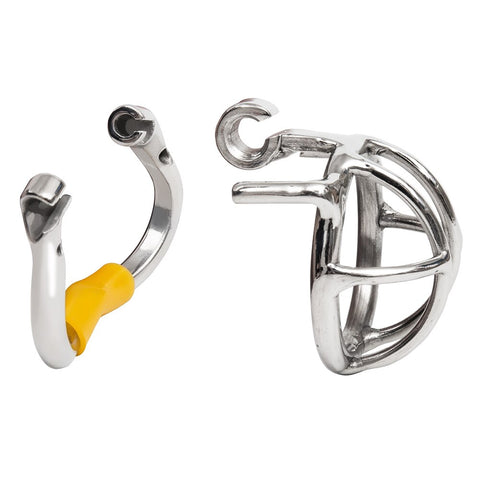
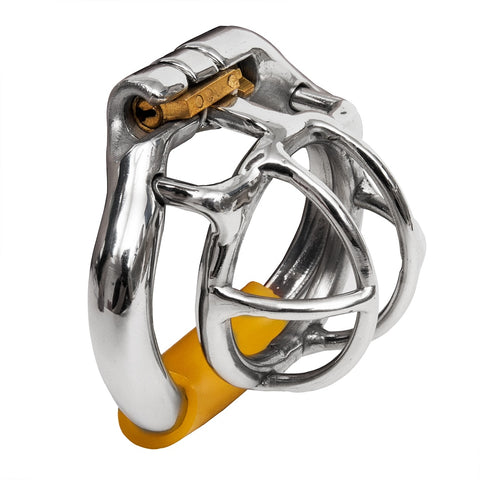
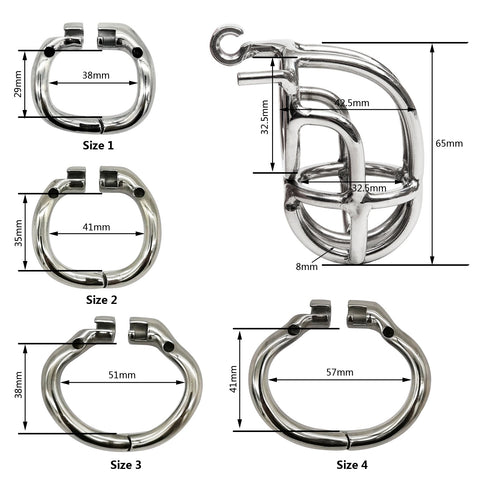
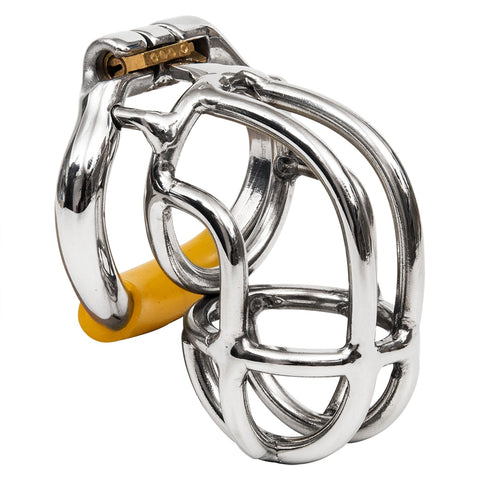
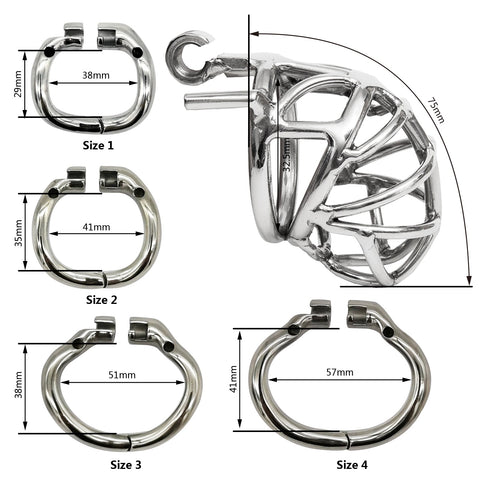
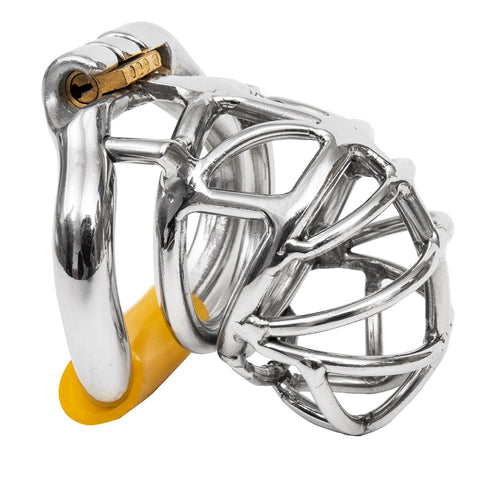
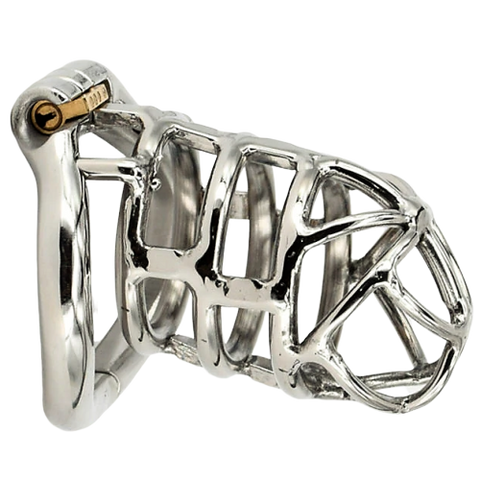
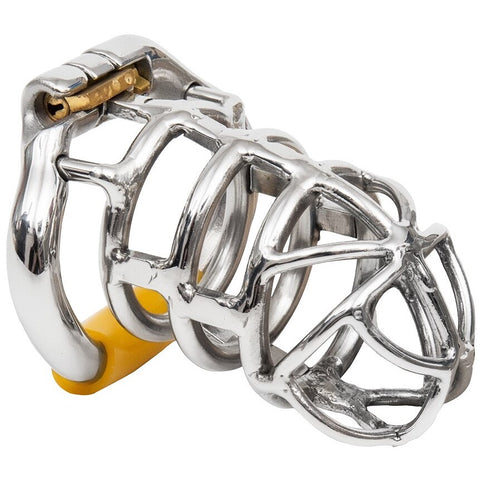
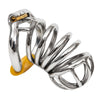
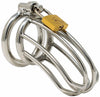
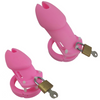
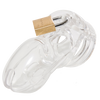
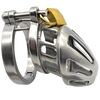
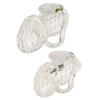
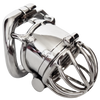
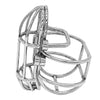
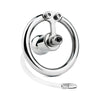
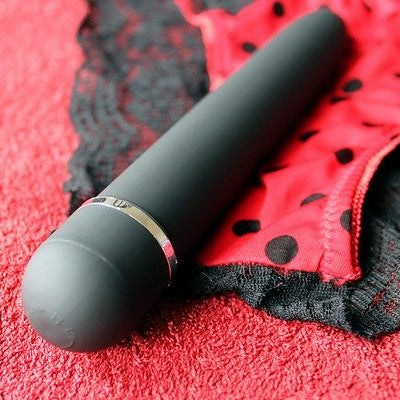
Accessories such as dildos, vibrators, strap-ons , and masturbators, etc., are all accessories that can be incorporated into sexual play. To this can be added, of course, all BDSM accessories, chastity cages, ball stretchers, handcuffs, and any other accessories your imagination can conjure up. Using these "toys," you can create stimulation without using the penis, vagina, mouth, or anus. All these accessories can add "spice" to a sexual encounter.
Orgasm denial is a fantasy often experienced by men:
The desire to be dominated, to demonstrate loyalty, and to test one's limits are the three main reasons for this male fantasy. Indeed, men can have, and often do have, fantasies and desires that they don't dare admit to themselves or their partner. This is due to embarrassment, shame, or fear of "damaging their virility and masculinity." No, no, and no! Every sexual fantasy is honest and legitimate, and everyone is free to tell their partner what they desire without feeling embarrassed.
Orgasm denial and chastity:
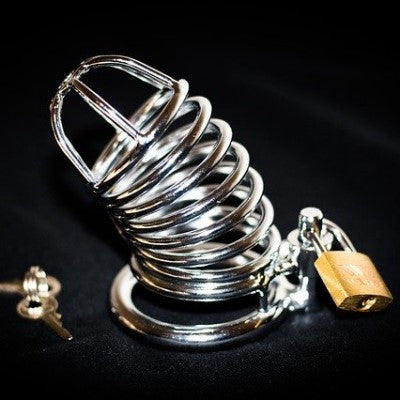
The dominant partner's sense of superiority over the submissive partner is amplified tenfold in these situations. Controlling their partner's pleasure is indeed a source of great satisfaction and pleasure for the dominant partner. They know their partner deeply desires orgasm and fulfillment, but they deny them access. And the game continues like this, again and again… This denial of orgasm can prolong mental, as well as sexual, frustration. In fact, this entire denial of orgasm, this sexual game, is designed to prolong frustration and increase sexual desire. Sexual frustration is the basis of this sexual "tension" between the two partners.
Finally, as I mentioned earlier, this intensifies the arousal of the submissive, frustrated person; but it can also increase the arousal of the dominant. The frustrated person feels increasingly intense desire, and it becomes visceral. In this sense, I mean that each time the person wants to reach orgasm but is denied it, the desire increases more and more, and the person literally wants to have sex constantly. Every part of their body becomes extremely sensitive, and every caress or touch becomes an intense sexual pleasure.
Danger of prolonged orgasm denial:

Orgasm denial and BDSM in general should be practiced in a relationship where both people respect each other.
"Blue balls" is the most common risk associated with this practice. Indeed, the blue balls syndrome is well-known. The practice of orgasm denial must be conducted according to very strict rules; the body must not suffer in the true sense of the word. "Blue balls" can have harmful consequences for a person's reproductive system. Furthermore, it is very painful, and when this occurs, I recommend masturbating, or at least ejaculating if you feel the pain is too intense.
Thicker, lower-quality semen can also be a consequence of orgasm denial . Reaching the pre-ejaculatory point several times without releasing semen has repercussions. When this point is reached, semen production is "restarted" under the mistaken belief that semen is about to be released. This results in a higher concentration of semen in the testicles, and the semen becomes thicker.
A decrease in concentration can result from this practice. Indeed, being sexually frustrated puts you on edge constantly. When you have a deep desire to reach orgasm and achieve sexual pleasure, you think about it continuously, and as a result, concentration becomes difficult because the sexual desire is too intense.
Another consequence of orgasm denial can be increased nervousness. Indeed, being sexually frustrated puts you under pressure; the desire to reach orgasm is immense and almost impossible to control. Not being able to "release" can create tension and a kind of constant agitation. This leads to a complete disinhibition of inhibitions, and you want to reach orgasm at all costs, which in turn makes you nervous.