

Medieval Chastity Belt | 500 Years of History
of reading - words
According to various texts and legends, a chastity belt is a metal device that locks around a person's genital area to prevent sexual intercourse and masturbation .
The design of chastity belts varied from region to region, although they all shared the same basic design. Medieval chastity belts were often made of metal, although some had leather straps to fasten around the waist. They were called "belts," but in reality, they resembled metal underwear with small holes for the elimination of excrement and urine.
Design of medieval chastity belts
In the Middle Ages, some chastity belts had vaginal slits lined with protruding spikes to deter men from approaching them. Other medieval chastity belts were more discreet and less painful to wear, although probably still extremely uncomfortable.

Two medieval belts are on display at the Cluny Museum in Paris. The first is believed to have belonged to Catherine de Medici, Queen of France from 1547 to 1559. It consists of a simple velvet hoop with a small iron plate attached to the front. The second is thought to have been worn by Anne of Austria, Queen of France and Navarre from 1615 to 1643; it is made up of a pair of hinged plates attached by a metal belt .
Some of these medieval chastity belts were reportedly padded to prevent cutting or scratching the women who wore them. Unfortunately, the padding became soiled easily and had to be changed regularly. Because the belt had to be removed to change the padding, the points that skirted the vaginal opening were then sanded down. Medieval belts were not meant to be comfortable; their purpose was to keep the women who wore them chaste while their husbands were at war.
Invention of the Chastity Belt

References to chastity belts have been found in texts dating back to the first century, but according to medieval historian Albrecht Classen, the existence of such items may be nothing more than a myth.
The invention of the chastity belt is believed to date back to the Middle Ages , when men would confine their wives or daughters to ensure their virginity and fidelity during their long absences. Texts suggest that the belts were used during the Crusades , when men left their wives to fight in wars. During their absence, their wives were fitted with a chastity belt to prevent temptation and preserve their fidelity until their husbands returned with the key. The earliest descriptions of chastity belts are found in religious texts. However, few of these describe the actual wearing of these metal belts . For many, it is a metaphor for the idea of preventing sexual intercourse.
 Although the symbol of a knotted rope belt was used to represent the chastity of the bride in ancient Rome, the idea that medieval women wore metal belts for long periods is medically dubious; prolonged skin-to-metal contact would result in abrasions, injuries, and infections.
The first recorded depiction of a belt appeared in a book called Bellifortis, written in 1405 by a German military engineer named Konrad Kyeser. However, historians have noted that Kyeser's writing was often humorous, and the book included several jokes and references not meant to be taken literally. In this light, it's possible the belt illustration was another of his sarcasms scattered throughout the book.
It was only in the 16th century that references and depictions of chastity belts became commonplace. Even during the Middle Ages , references do not show the actual use of these belts.
The era of the female chastity belt
In antiquity, the chastity belt was undeniably a comic reference to men's specific fear of their wives being unfaithful with younger men. While such fears may have been common at the time , there is little evidence that men actually forced their wives to bind their bodies to allay their anxieties.
 Contemporary historians suspect that many chastity belts purportedly from the Middle Ages and Renaissance are actually Victorian forgeries. However, it is undeniable that chastity belts were made at some point, given the number of medieval examples on display worldwide. But the chastity belts we see in museums may very well be forgeries, reproductions, or created in a much later period than tradition suggests.
Rather than being developed in the Middle Ages , they were probably created in the late 18th or 19th century. According to Mr. Classon, these devices were most likely created as a joke; they were never intended to be taken seriously and were never used. In fact, the Victorian belief in the dangers of masturbation led to the creation of numerous patents for actual chastity belts, this time for men.
While chastity and fidelity have been widely valued virtues throughout history , women's bodies were most likely never kept locked away at any point. While the belief that women should remain chaste is not a myth, the idea that chastity belts were used to physically confine them probably is.
The history of the male chastity cage
Today, we know that self -pleasure is a healthy and perfectly normal process with many benefits ranging from improving your mood to alleviating headaches and menstrual cramps, which is why we sometimes masturbate.

Nocturnal emission, releasing semen while you sleep due to erotic dreams or the friction of your blankets, was considered the primary symptom of a deadly (and entirely fictitious) disease called " spermatorrhea ." In the 18th century, masturbation was frowned upon. People believed it diverted young children, especially boys, from productive lives. Frequent masturbation was thought to shrink the penis and testicles , decrease sperm quality, and even cause infertility .
So what have doctors, scientists, inventors, and religious authorities done to limit the global "epidemic" of masturbation?
They were simply inspired by the female chastity belts that had existed since the Middle Ages, or even antiquity according to some sketches. The myth recounts that these belts were used to maintain the fidelity of women while their husbands were at war.
The ancestors of the chastity cage
A journey through the American, British, and French patent offices of the 1800s reveals more than a dozen distinct devices patented with the aim of preventing young boys from touching themselves or even getting erections .
This collection of barbaric torture instruments even includes the "ancestors" of the modern chastity cage !
Some of these male chastity devices were simply preventative in nature. Others were designed to cause pain, humiliation , and sometimes public shame! Some were inspired by ancient armor that completely covered the genitals, often leading to infection or disease because they could no longer be properly cleaned.
Here are some examples of very real and very uncomfortable anti-masturbation tools used in surprisingly recent history:
The penis Jugnum
The Jugnum penis , also known as the spermatorrhea ring , was primarily designed to prevent wet dreams and nocturnal emissions.
 If the wearer developed an erection during the night, the spikes would penetrate his penis , forcing him to wake up and calm down so the pain would subside. It consisted of a single spiked ring placed around the base of the penis just above the testicles . Modern scholars and historians of sexuality have described it as "a tool halfway between a penis ring and a bear trap."
It is not known exactly who invented or patented the Jugnum penis , or in what year, as several competing designs were available on the market at the time.
Due to its simplicity, the spermatorrhea ring is generally considered the most popular and widespread of the anti-masturbation devices listed here.
The Spermatic Truss

The Spermatic Truss was first patented in 1876 by Harvey Stephenson of Pennsylvania. His original design "simply" prevented erections by placing the flaccid penis inside a cloth or leather pouch and attaching it to the leg.
The Truss is widely considered the precursor to the modern chastity cage design, as it was the first to use a series of rings to block erections . This design is still the same one used today. However, a few years later, Stephenson filed a new patent for an "improved" version, which enclosed the penis in a series of spiked rings, similar to the Jugnum penis described above.
However, it is strongly recommended that modern slaves (or submissives ) avoid any designs featuring spikes such as those designed by Stephenson, as these can permanently damage the sensitive skin of the penis , and possibly even render the wearer permanently impotent.
The penis cooler
Have you ever stepped into an icy cold shower to get rid of a bothersome erection ? Well, in 1893, an American named Frank Orth patented an extremely complex device that used this tried-and-tested method to prevent erections and masturbation .

The " penis cooler " required the victim to wear waterproof rubber underwear. Sensors inside the underwear temporarily activated a pump in case of an erection . Ice-cold water was then irrigated onto the victim's penis for several minutes.
Orth believed that eventually the victim's penis would become smaller and smaller, until it reached a stage where he could never get erections again.
The diagrams attached to the patent indicated that the device would be available in several versions, some of which could be attached to a house's water system and others capable of transporting water independently.
Parental warning
This device worked by placing the penis in a motion-sensitive sheath. As soon as the penis grew larger, a mechanism rang a bell, summoning the parents so they could punish their deviant son.
Bowen's Hair Puller
 The "Bowen device" consisted of a series of narrow cables that were attached to individual pubic hairs . When the child's penis began to become erect, the hairs were pulled tightly, causing extreme pain. One particular device, patented by a "James H. Bowen" in 1889, has not retained its popularity, even among the most extreme modern masochists. Sometimes, the hairs were even completely ripped out and did not grow back, leaving unsightly bald patches on the wearer's groin.
Raphael Sohn's mechanical sheath
 The sheath resembled a modern penis cage , but much, much, much tighter. It was designed to clamp the penis like a vise, preventing even the slightest movement. Finally, in 1906, Raphael Sohn patented the "mechanical sheath," a device made of solid metal locked by a key the size of a fingernail.
Abominable period of the chastity cage
The examples above are just a few of the ways parents, doctors, and scientists have tried to put an end to the "curse of masturbation " once and for all. Boys were sent to bed in pajamas, aprons, and even straitjackets to prevent chafing and keep their hands away from their genitals. Pamphlets were published insisting that masturbation caused blindness, impotence , madness, and even death.
Two rather familiar names, John Harvey Kellogg and Sylvester Graham, advocated for bland diets to reduce sexual lust in young men and women. Their crusade resulted in the development of Kellogg's Corn Flakes cereal and Graham crackers, both of which remain popular today (though hopefully they are no longer used to prevent children from masturbating).
It wasn't until the 1930s that doctors and academics began to recognize that masturbation might not be as deadly as previously thought. Fortunately, most of the barbaric devices described in this article are no longer in production and their patents have expired.
However, a quick Google search reveals that some religious extremist parents still hold Victorian views on the dangers of allowing their children to masturbate .
The modern chastity cage in BDSM
We started with a beautiful fiction in the Middle Ages with female chastity belts , then transformed it into a horrible reality with the male chastity cage , but where are we now?
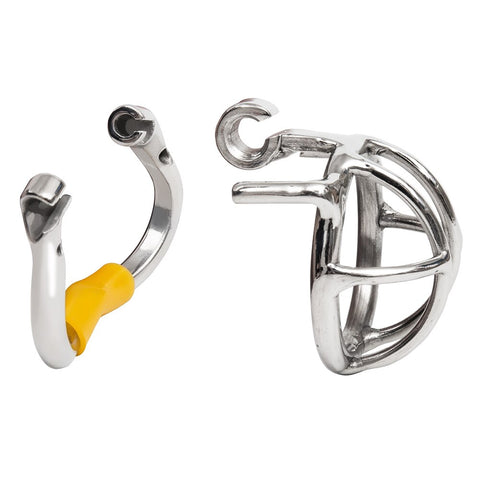
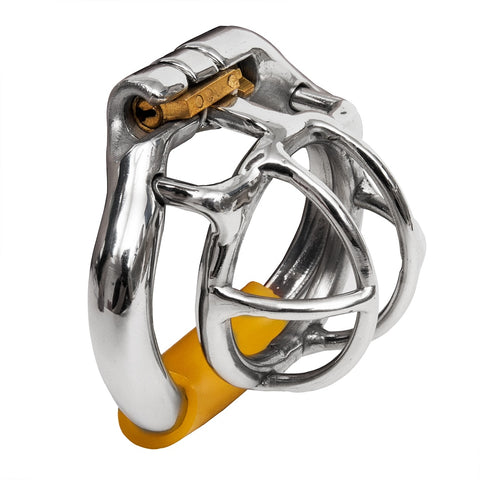
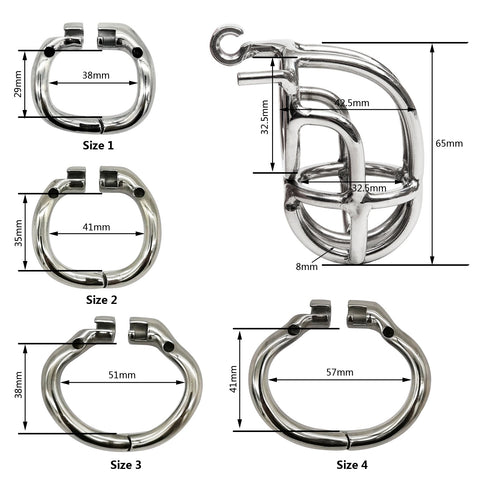
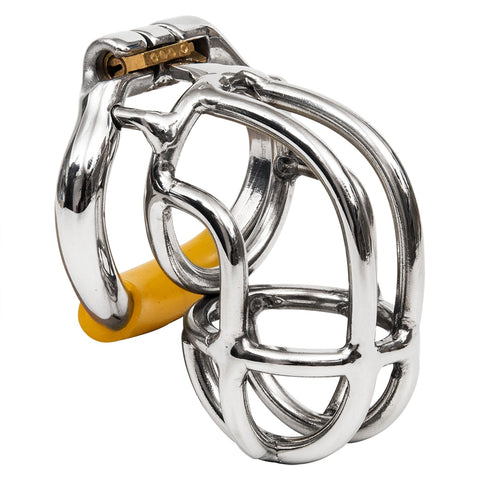
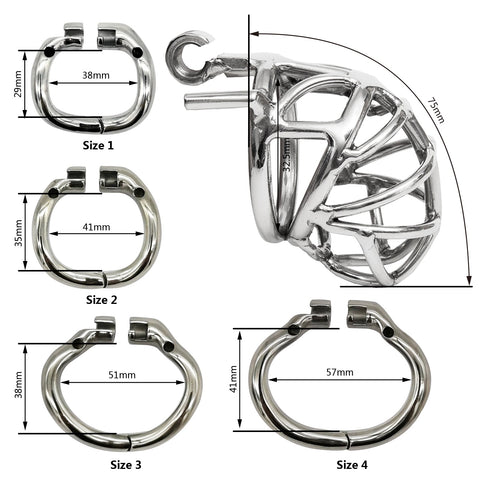
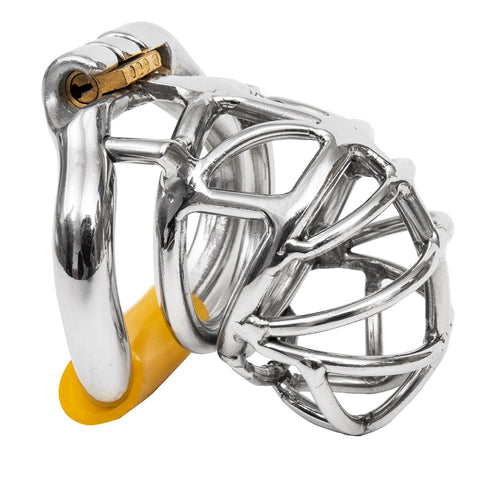
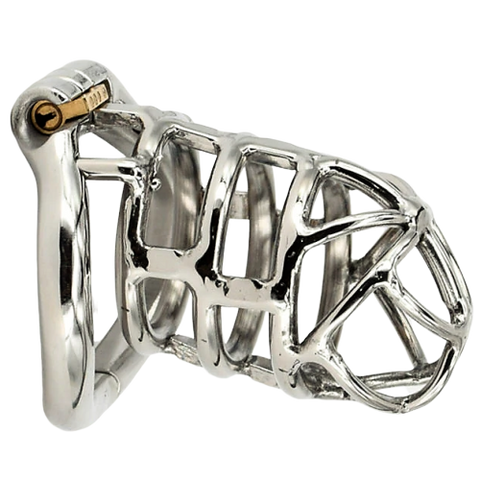
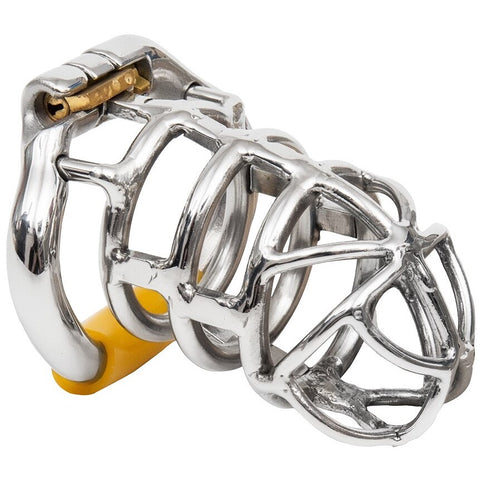
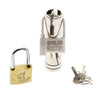
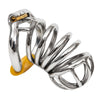
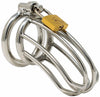
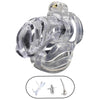
 Abstinence can be temporary during erotic play, or permanent to ensure partner fidelity within a relationship. These male chastity devices range from simple, non-locking silicone sheaths to robust stainless steel chastity cages with tamper-proof internal locks. Today, most men who wear a chastity cage or chastity belt do so either by choice or because their dominant partner requires it. They are produced entirely for consenting adults interested in BDSM, orgasm denial , abstinence , and those who wish to place their sex life in the hands of a dominant partner.
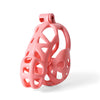
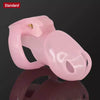
Since the advent of the internet, online sales have completely revolutionized the world of chastity . Many people unfamiliar with the BDSM scene can easily immerse themselves in it and even discreetly purchase a wide range of sex toys . At cage-chastete.fr, we offer the largest selection of chastity cages in Europe. We carry all kinds of materials: metal , plastic , resin , silicone , leather (coming soon), and numerous accessories, some more kinky than others, that can be used with them. These include urethral plugs , electrostimulation membranes , anti-return spikes , testicle separators , and more.
Chastity cages for men and women are produced by companies worldwide. Current statistics reveal that 80% of chastity device buyers are men.
A token of chastity in cinema
 Men in Tights 1993: Robin Hood comedy film: The female chastity belt, meanwhile, continues to have its place in fiction and fantasy.
Mad Max: Fury Road (2015): a post-apocalyptic thriller by George Miller
Spartatouille 2008: a comedy by Jason Friedberg and Aaron Seltzer
Men in Tights ( 1988): action and science fiction film by RJ Kizer and Donald G. Jackson